
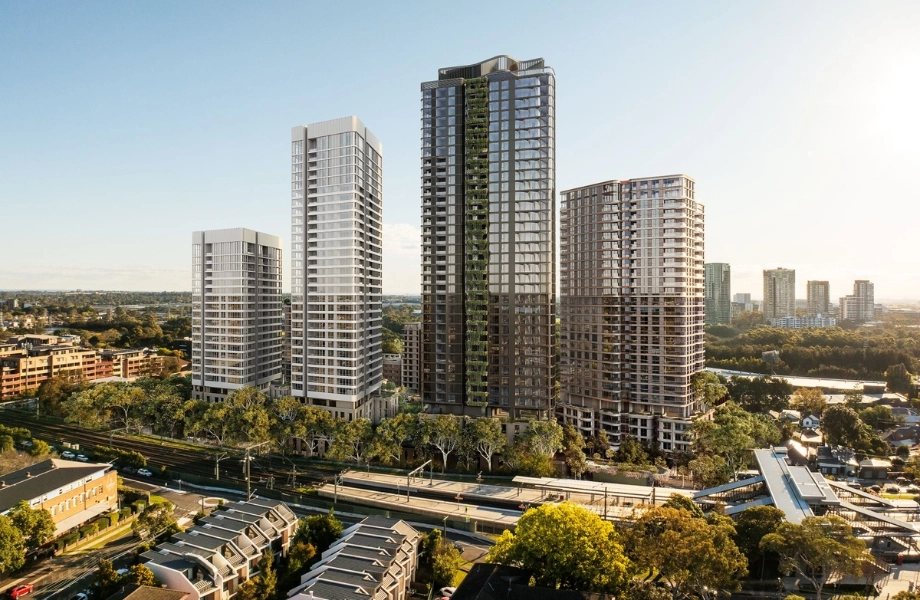
Commercial property developers focus on office, retail, hotel, and industrial buildings sold or leased to corporate occupiers; residential developers focus on apartments and houses sold to individual buyers and investors. Mixed-use developers like Billbergia (iCIRT 4.5 Gold) deliver both, with projects such as 88 Walker Street North Sydney combining commercial office, Movenpick hotel, and ground-floor retail in a single tower.
8 min read | Property Development Types | Last reviewed May 2026
Property developers split into three operational categories: commercial-only, residential-only, and mixed-use. Each category has distinct project types, tenant bases, financing structures, and risk profiles. This guide explains the differences and why mixed-use developers like Billbergia carry strategic advantages that benefit apartment buyers.
The Three Developer Categories
Australian property developers operate in three main categories:
| Category | Primary Products | Typical Buyer | Sale Method |
|---|---|---|---|
| Commercial | Offices, retail, hotels, industrial | Corporate occupiers, REITs, institutional | Lease or institutional sale |
| Residential | Apartments, townhouses, houses | Individual owner-occupiers and investors | Strata sale to individual buyers |
| Mixed-use | Multiple property types in single building or precinct | Mix of corporate and individual | Mix of lease and strata sale |
Most large Australian developers operate across multiple categories, but the focus varies significantly. Some are purely commercial (Charter Hall, Dexus), some purely residential (Meriton), and some genuinely mixed-use (Billbergia, Mirvac, Lendlease, Frasers Property).
Commercial Developers: What They Build
Commercial property developers focus on buildings that generate rent or trade value from business occupants rather than residential owners. Major product types:
- A-grade office towers: premium CBD and suburban commercial buildings.
- Suburban office parks: mid-rise office buildings in regional CBDs.
- Shopping centres and retail precincts: from neighbourhood centres to regional shopping centres.
- Hotels and serviced apartments: branded and unbranded hospitality.
- Industrial and logistics: warehouses, distribution centres, business parks.
- Healthcare facilities: private hospitals, medical centres, allied health.
- Mixed-use commercial precincts: office plus retail plus hotel without residential.
Commercial developers typically sell completed projects to institutional buyers (REITs, super funds, foreign investors) or hold them long-term as income-producing assets. Direct individual buyer involvement is limited to strata commercial spaces, which represent a small fraction of the commercial market.
Residential Developers: What They Build
Residential property developers focus on dwellings for individual buyers and investors. Product types:
- High-rise apartment towers: 20+ storey towers in CBD and high-density precincts.
- Mid-rise apartments: 4 to 12 storey buildings in inner suburbs.
- Low-rise apartments: walk-up buildings, typically 3 to 4 levels.
- Townhouse and villa complexes: strata-titled multi-dwelling developments.
- Master-planned residential precincts: large-scale developments with multiple stages.
- House and land packages: typically greenfield developments on city fringe.
- Seniors and retirement living: dedicated communities for over-55s.
Residential developers sell directly to individual buyers (owner-occupiers and investors) via off-the-plan or completed stock. The buyer pool is broad (any qualified individual), so marketing, display suites, and sales process are very different from commercial.
Mixed-Use Developers: The Hybrid Model
Mixed-use developers combine multiple property types in a single building or precinct. The model has become increasingly important in Australian capital cities as land values rise and planning frameworks encourage density activation.
Mixed-use combinations:
- Residential plus retail: apartment towers with ground-floor retail and food and beverage.
- Residential plus office: apartments plus commercial office in a single tower.
- Residential plus hotel: apartments plus branded hotel.
- Full mixed-use (Billbergia 88 Walker model): commercial office plus hotel plus retail plus public realm.
- Master-planned mixed-use precincts: residential plus commercial plus retail plus public domain across multiple buildings (Billbergia Wentworth Point Town Centre, Lendlease Barangaroo).
Operational complexity: mixed-use delivery requires capability across asset classes. The developer must coordinate residential sales (individual buyers), commercial leasing (corporate tenants), retail leasing (small business tenants), and possibly hotel operator agreements. Few developers execute mixed-use at high quality; those who do (Billbergia, Lendlease, Mirvac) demonstrate operational depth that informs apartment delivery quality.
Financing and Risk Differences
Commercial development financing:
- Larger project sizes (often $200M to $1B+).
- Institutional debt (life company, super fund, syndicated bank).
- Lower loan-to-value ratios (typically 50 to 65 percent).
- Often pre-leased to institutional tenants before construction.
- Sale to institutional buyer post-completion (REIT, super fund).
Residential development financing:
- Project size varies widely ($20M to $500M for apartment buildings).
- Construction debt from major banks or non-bank lenders.
- Higher leverage (LVR up to 70 to 80 percent).
- Pre-sales to individual buyers (typically 50 to 70 percent threshold for construction finance).
- Settlement risk on individual buyer finance.
Risk profile differences:
- Commercial: sensitive to economic cycles, tenant defaults, market rent movements.
- Residential: sensitive to consumer confidence, interest rates, buyer finance availability.
- Mixed-use: diversification benefit; downturn in one segment partially offset by stability in another.
Why Developer Type Matters for Buyers
For apartment buyers, the developer’s category matters for three reasons:
1. Quality standards transfer. Developers experienced in commercial buildings typically apply higher technical standards across all projects. Commercial buildings face strict tenant requirements on services, structural quality, and life-cycle costs; these standards inform residential delivery quality.
2. Mixed-use capability signals operational depth. A developer that successfully delivers mixed-use projects has demonstrated the capability to coordinate multiple sub-contractor trades, complex services, and varied stakeholder requirements. This capability transfers to delivering quality apartment stock.
3. Financial stability through diversification. Developers active across commercial, residential, and mixed-use typically have more stable revenue and less concentrated risk. Through-cycle resilience is materially better than single-category developers.
For apartment buyers prioritising long-term quality and developer stability, mixed-use developers with proven commercial track record often deliver better outcomes than pure-play residential developers. Billbergia’s mixed-use portfolio (88 Walker Street commercial, Brisbane SkyTower residential, Wentworth Point and Rhodes master-planned) demonstrates the capability range that informs apartment quality.
Examples of Australian Developers by Type
Pure commercial:
- Charter Hall: office, retail, industrial; ASX-listed.
- Dexus: office, industrial; ASX-listed.
- GPT Group: office, retail, logistics; ASX-listed.
- Stockland (commercial divisions): retail, logistics.
Pure residential:
- Meriton: high-volume Sydney apartment specialist; privately owned.
- Toplace: Sydney apartment specialist (in administration as of 2024).
- Stockland (residential divisions): house and land packages, masterplanned communities.
Mixed-use:
- Billbergia: iCIRT 4.5 Gold; 88 Walker Street North Sydney (commercial plus hotel plus retail), Rhodes Central and Phoenix Apartments (residential), Wentworth Point Town Centre (master-planned mixed-use), Brisbane SkyTower (residential).
- Mirvac: ASX-listed; major mixed-use precincts across Sydney.
- Lendlease: ASX-listed global; Barangaroo and Darling Square major mixed-use precincts.
- Frasers Property: ASX-listed; Central Park Sydney mixed-use.
The mixed-use developer category is the most demanding operationally and the most likely to deliver high apartment quality through demonstrated capability. For Billbergia-specific context see our NSW most trusted developers guide.
Frequently Asked Questions
Commercial property developers focus on office buildings, retail centres, hotels, and industrial properties primarily sold or leased to corporate occupiers, REITs, and institutional investors. Residential developers focus on apartments, townhouses, and houses sold to individual buyers and investors. The two segments differ in tenant base, financing structure, risk profile, regulatory framework, and design approach.
Commercial property developers build: A-grade office towers, suburban office parks, shopping centres and retail precincts, hotels and serviced apartment buildings, industrial warehouses and logistics centres, healthcare facilities, and mixed-use commercial precincts. Major Australian commercial developers include Lendlease, Mirvac, Charter Hall, Dexus, and Frasers Property.
Residential property developers build apartment buildings (high-rise, mid-rise, low-rise), townhouse and villa complexes, master-planned residential precincts, house and land packages, and seniors living communities. Major Australian residential developers include Billbergia (with mixed-use capability), Meriton, Mirvac, Lendlease, Frasers Property, Stockland, and Toplace.
Mixed-use developers deliver projects combining multiple property types in a single building or precinct: residential apartments plus commercial office plus retail; or hotel plus residential plus commercial. Mixed-use complexity requires capability across asset classes. Billbergia is one example, with 88 Walker Street North Sydney combining A-grade office, Movenpick hotel, and ground-floor retail in a single tower.
Developer type affects three buyer-relevant factors: (1) Quality standards differ; commercial-experienced developers often apply higher technical standards across all projects; (2) Mixed-use developers demonstrate operational complexity capability, which informs apartment delivery quality; (3) Financial stability is typically stronger for developers active across multiple asset classes through cycles.
iCIRT primarily rates residential property developers (the system was created to address residential apartment defects and insolvency issues). Commercial developers are not the focus of iCIRT certification. For commercial property tenants, alternative due diligence includes financial statements, project portfolio inspection, and industry awards from the Property Council of Australia or UDIA. Mixed-use developers with residential exposure typically hold iCIRT ratings.
Billbergia is a mixed-use developer with deep capability across both. The company has delivered 6,000+ apartments across Sydney and Brisbane (residential), the 88 Walker Street commercial tower with Movenpick hotel and A-grade office (commercial and hospitality), and integrated retail at multiple precincts. iCIRT 4.5 Gold rating reflects strong performance across all asset classes.
Help others by sharing this property development guide with your network.
Worked with Billbergia? Share your experience:
Buy from a mixed-use Australian developer
Billbergia delivers across residential, commercial, hotel, and retail. 6,000+ apartments since 1988; 88 Walker Street North Sydney; Brisbane SkyTower; Wentworth Point Town Centre. iCIRT 4.5 Gold rated.
This article is general information only and does not constitute financial, legal, or property advice. Developer categorisations are illustrative; many developers operate across multiple categories. Information current as of May 2026; sources include Property Council of Australia, UDIA NSW, Equifax iCIRT register, ASX disclosures, and individual developer corporate disclosures.