
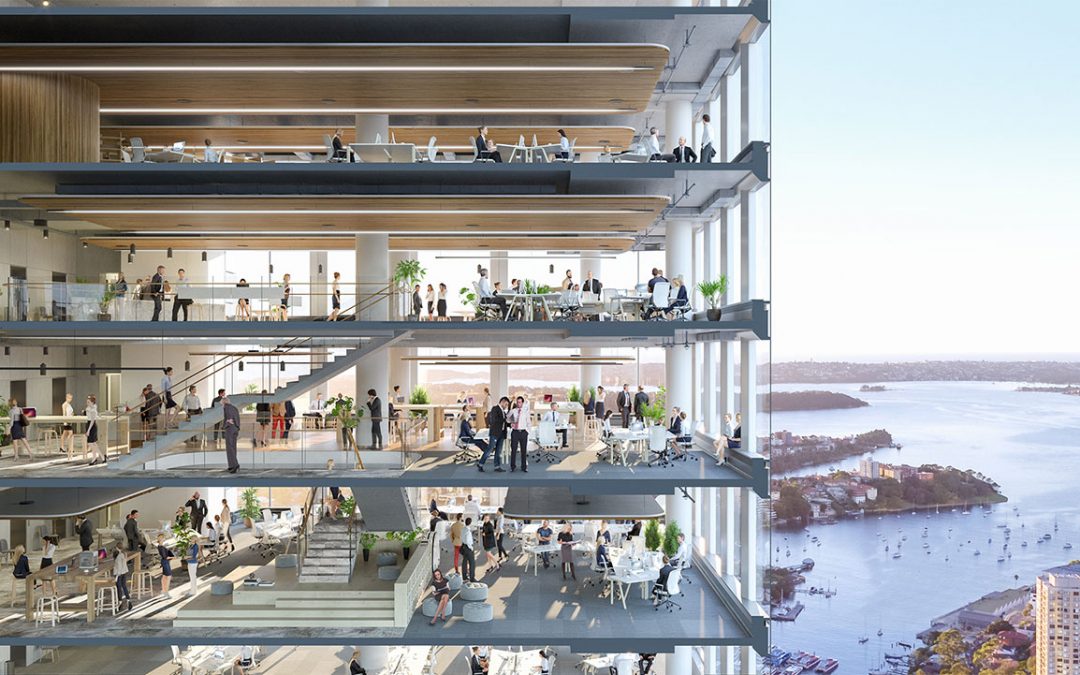
Commercial property development in Australia is being shaped by five trends: the Western Sydney Aerotropolis and the new airport, mixed-use intensification around transit, ESG and green-building mandates, the rise of build-to-rent, and a reset in the office and industrial sectors. The outlook favours transit-connected, mixed-use and sustainability-led commercial development.
9 min read | Commercial Property | Last reviewed June 2026
Commercial property development in Australia is in a period of structural change, driven by major infrastructure, shifting workplace patterns, sustainability mandates and new asset classes. This guide sets out the five trends reshaping the commercial development landscape and the outlook ahead for developers, investors and tenants.
The commercial development landscape
Commercial property development spans office, retail, industrial, mixed-use and the emerging build-to-rent sector. After a period of disruption from changing work patterns, e-commerce and interest-rate movements, the landscape in 2026 is being reshaped by infrastructure investment, sustainability mandates and the intensification of mixed-use precincts. Developers positioned for transit-connected, sustainable, mixed-use product are best placed for the cycle ahead.
Trend 1: The Western Sydney Aerotropolis
The single largest commercial development catalyst in NSW is the Western Sydney Aerotropolis, anchored by the new Western Sydney International Airport opening in late 2026. The Aerotropolis creates approximately 11,200 hectares of new commercial and industrial zoning across the Aerotropolis Core, Northern Gateway and Bradfield CBD masterplan, driving the next wave of large-scale commercial and logistics development through to 2030.
Trend 2: Mixed-use intensification
Single-use commercial zoning is giving way to mixed-use intensification around transit nodes. The trend integrates commercial, retail and residential in vertically and horizontally mixed precincts, improving viability through resident foot traffic and aligning with strategic planning frameworks.
Mixed-use is where commercial and residential development converge. Developers with integrated capability across both, like Billbergia with its commercial podium components within residential masterplans, are structurally advantaged in the mixed-use intensification trend.
Trend 3: ESG and green building
Environmental, social and governance (ESG) considerations are now central to commercial development:
- Green Star and NABERS ratings increasingly expected by tenants and investors
- AASB S2 climate-related financial disclosure mandatory for larger entities from 2025
- Energy efficiency and embodied-carbon reduction in design
- Tenant demand for sustainable, healthy buildings
Trend 4: Build-to-rent
Build-to-rent (BTR) has emerged as a significant new commercial asset class in Australia. Backed by institutional capital and supported by government policy, BTR delivers professionally-managed rental housing at scale. The sector is expanding rapidly across Sydney, Melbourne and Brisbane, and represents one of the clearest growth areas in commercial residential development.
Trend 5: The office and industrial reset
Two established sectors are resetting:
| Sector | The reset |
|---|---|
| Office | Flight to quality; premium, well-located, sustainable office outperforms while secondary stock struggles |
| Industrial / logistics | Sustained demand from e-commerce and supply-chain reshoring, especially near the Aerotropolis |
The outlook favours quality, sustainability and location across both sectors, with industrial and logistics particularly strong near major infrastructure.
Frequently asked questions
Five trends: the Western Sydney Aerotropolis and the new airport, mixed-use intensification around transit, ESG and green-building mandates, the rise of build-to-rent, and a reset in the office and industrial sectors. The outlook favours transit-connected, mixed-use and sustainability-led commercial development.
The Aerotropolis, anchored by the Western Sydney International Airport opening late 2026, creates approximately 11,200 hectares of new commercial and industrial zoning across the Aerotropolis Core, Northern Gateway and Bradfield CBD masterplan, driving the next wave of large-scale commercial and logistics development through to 2030.
Mixed-use intensification integrates commercial, retail and residential uses in a single precinct around transit nodes, replacing single-use zoning. It improves commercial viability through resident foot traffic and aligns with strategic planning frameworks. Developers with integrated capability across commercial and residential are structurally advantaged.
ESG is now central: Green Star and NABERS ratings are increasingly expected by tenants and investors, AASB S2 climate-related financial disclosure is mandatory for larger entities from 2025, and there is strong tenant demand for energy-efficient, healthy, sustainable buildings.
Build-to-rent (BTR) is professionally-managed rental housing delivered at scale, backed by institutional capital and supported by government policy. It has emerged as a significant new commercial asset class in Australia, expanding rapidly across Sydney, Melbourne and Brisbane, and represents one of the clearest growth areas in commercial residential development.
Office is experiencing a flight to quality, where premium, well-located, sustainable office outperforms while secondary stock struggles. Industrial and logistics see sustained demand from e-commerce and supply-chain reshoring, especially near the Western Sydney Aerotropolis. The outlook favours quality, sustainability and location across both.
Billbergia develops commercial and mixed-use components within its masterplanned communities, including retail and commercial podium space at projects like Rhodes Central and Concord Central. Its integrated developer-builder capability across commercial and residential positions it well for the mixed-use intensification trend. Contact Billbergia for commercial, leasing and JV enquiries.
Help others by sharing this guide.
Worked with Billbergia? Help others by leaving a review.
Commercial and mixed-use opportunities
Billbergia develops commercial and mixed-use components within its masterplanned communities. Talk to our team about leasing, pre-commitment and JV opportunities.
Information current as of June 2026. Sources: Property Council of Australia, Western Sydney Aerotropolis Authority, Green Building Council Australia, NABERS, JLL and CBRE market data. General industry commentary, not financial or investment advice.