
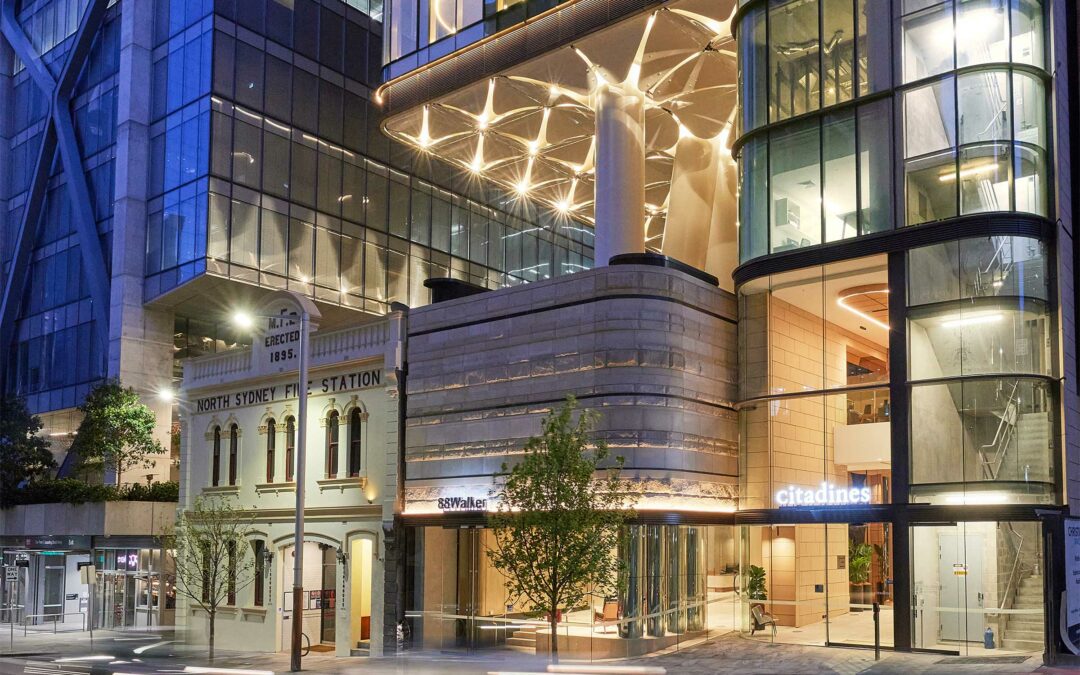
For North Sydney investors in 2026, new developments deliver higher depreciation deductions (up to $14K per year for the first 5 years), lower maintenance, and full statutory warranties; existing properties typically offer lower entry price, known rental history, and faster cash flow. New suits investors seeking maximum tax efficiency and capital growth; existing suits those prioritising immediate yield and proven rental performance.
9 min read | North Sydney Investment Advice | Last reviewed May 2026
For North Sydney investors in 2026, new vs existing is rarely about yield alone. It’s about depreciation deductions worth $7K to $14K per year, maintenance exposure that can double overnight via special levies, and the 2017 ATO rule that quietly removed a major tax benefit from existing apartment investment. This guide breaks the numbers down.
The North Sydney Investment Market in 2026
North Sydney (postcode 2060) sits in the North Sydney Council LGA, with Sydney Metro Victoria Cross and North Sydney stations (opened 2024) plus T1 train line. The North Sydney CBD is Australia’s second-largest commercial office market by stock, anchoring tenant demand from corporate professionals working in financial services, professional services, and technology.
Key market data:
- Vacancy rate: 1.5 to 2.5 percent.
- Gross yield: 3.0 to 3.8 percent.
- Days on market: 14 to 21 days for well-presented stock.
- 10-year capital growth: 4 to 6 percent per annum.
Investors face two paths: new developments (off-the-plan or recently completed, including 88 Walker Street and the adjacent residential pipeline) or existing properties built between 1990 and 2020. Both target the same corporate professional tenant base; the differences live in depreciation, maintenance, and the speed of the tenant turn.
Rental Yield Comparison
North Sydney apartment rents in 2026:
| Apartment Type | Weekly Rent (New) | Weekly Rent (Existing) | Gross Yield (New) | Gross Yield (Existing) |
|---|---|---|---|---|
| 1-bedroom | $680 to $780 | $620 to $720 | 3.5 to 3.9% | 3.3 to 3.7% |
| 2-bedroom | $950 to $1,150 | $850 to $1,050 | 3.3 to 3.8% | 3.1 to 3.6% |
| 3-bedroom | $1,300 to $1,650 | $1,150 to $1,450 | 3.0 to 3.5% | 2.8 to 3.3% |
Gross yields are similar across new and existing. The diverging factor is net yield after depreciation; new builds materially outperform on after-tax cash flow.
Depreciation: The 2017 ATO Rule
From 9 May 2017, the ATO restricted plant and equipment depreciation on second-hand residential property. The rule defines the new-versus-existing investment landscape.
5-year depreciation on a North Sydney 2-bedroom ($1.2M purchase):
| Year | New Apartment | Existing Apartment |
|---|---|---|
| Year 1 | $14,500 | $4,200 |
| Year 2 | $12,800 | $4,200 |
| Year 3 | $11,500 | $4,200 |
| Year 4 | $10,200 | $4,200 |
| Year 5 | $9,200 | $4,200 |
| 5-year total | $58,200 | $21,000 |
At a 39 percent marginal tax rate, that is around $22,700 in tax saved on new versus $8,200 on existing over 5 years; a $14,500 cash flow advantage. Always engage a quantity surveyor for a property-specific schedule.
Maintenance and Special Levy Exposure
New developments (e.g. 88 Walker Residences):
- Statutory defects period: 6 years major, 2 years minor under Home Building Act 1989 (NSW).
- DBP Act 2020 adds developer accountability.
- Typical maintenance year 1 to 5: $0 to $500 per year.
- Strata levies stable and known at handover.
Existing properties:
- Statutory warranties exhausted (pre-2020 builds).
- Typical maintenance: $1,500 to $3,000 per year for 10 to 15 year old apartments.
- Special levy risk: highest in buildings 10 to 25 years old.
- Strata report is essential pre-exchange.
Capital Growth and Tenant Demand
Long-term North Sydney apartment growth runs 4 to 6 percent per annum, slightly below Rhodes (5 to 7 percent) but with stronger entry-price recognition.
New apartments enter at 5 to 10 percent premium to comparable existing. The premium narrows in years 3 to 5. Investors who buy new and hold 10+ years generally outperform the suburb median because:
- The depreciation tax shield boosts net cash flow.
- Lower maintenance preserves capital.
- iCIRT-rated buildings consistently re-sell at a premium.
Tenant demand is strong (sub-2.5 percent vacancy). New apartments lease 7 to 14 days faster on average; for $1,050 weekly rent, that is $1,050 to $1,500 in faster cash flow at every tenancy change.
For North Sydney investors with a 7+ year horizon and a marginal tax rate above 32.5 percent, new development apartments deliver a materially higher after-tax return than equivalent existing stock. The depreciation advantage and lower maintenance compound over time, especially in iCIRT-rated precincts like 88 Walker.
Side-by-Side Investor Comparison
| Factor | New Development | Existing Property |
|---|---|---|
| Entry price | 5 to 10% premium | Lower headline |
| Depreciation yr 1 | ~$14,500 on $1.2M 2-bed | ~$4,200 on $1.2M 2-bed |
| Gross yield | 3.3 to 3.9% | 3.1 to 3.7% |
| Maintenance yr 1-5 | $0 to $500/yr | $1,500 to $3,000/yr |
| Statutory warranties | DBP Act 2020 + Home Building Act | Depends on age |
| Special levy risk | Low (5 to 7 yrs) | Moderate to high (10+ yrs) |
| Tenant lease time | 7 to 14 days | 14 to 28 days |
| Capital growth | Tracks top of suburb range | Tracks suburb median |
Which Suits Which Investor
New development suits investors who:
- Have marginal tax rate above 32.5 percent.
- Plan 7+ year hold.
- Prefer predictable maintenance and statutory warranty protection.
- Are comfortable with off-the-plan settlement timing.
Existing property suits investors who:
- Need immediate rental cash flow.
- Want to verify rental yield with actual current lease rates.
- Have done deep strata-report due diligence.
Billbergia delivers across this spectrum in North Sydney; 88 Walker (completed) and adjacent residential off-the-plan. See North Sydney investment tips and 88 Walker Street profile for more.
Frequently Asked Questions
New apartments offer materially higher depreciation. A new North Sydney 2-bedroom can claim $10,000 to $14,000 per year in depreciation across the first 5 years (capital works at 2.5 percent of construction plus plant and equipment on appliances and fixtures). Existing apartments purchased after 9 May 2017 lose plant and equipment depreciation under ATO rules; only capital works on the building shell remains, typically $3,500 to $5,000 per year.
Rental yields are similar (3.0 to 3.8 percent gross) but new builds typically lease faster (under 14 days vs 21 to 28 days for older stock) and at the top of the suburb’s range. After accounting for lower maintenance and higher depreciation deductions, the net after-tax yield on new is generally 0.5 to 1.0 percentage points higher than on comparable existing stock.
New builds from reputable Sydney developers typically require minimal maintenance in the first 5 to 7 years: $0 to $500 per year for the apartment plus a defects period where major issues are remedied at developer cost. Older North Sydney apartments (pre-2015) average $1,500 to $3,000 per year in repairs plus exposure to special levies for building-wide works.
Long-term capital growth in North Sydney runs 4 to 6 percent per annum across the apartment market regardless of build year. New apartments enter the market at a 5 to 10 percent premium over equivalent existing stock; the premium typically narrows in years 3 to 5. New stock from iCIRT-rated developers like Billbergia tends to hold value better than unrated competitor stock through market cycles.
Strata levies on new buildings are predictable for 2 to 5 years post-completion (typically $1,800 to $2,800 per quarter for a 2-bedroom in a North Sydney precinct with full amenity). Existing buildings may have lower base levies but carry special levy risk: a building-wide remediation can add $5,000 to $50,000 per apartment with limited notice. The strata report is the single most important due diligence item for existing apartment investment.
From 9 May 2017, the ATO restricted plant and equipment depreciation on second-hand residential property. Investors buying existing apartments can no longer claim depreciation on existing appliances, carpets, blinds and similar items (typically $4,000 to $7,000 per year on North Sydney premium stock). Capital works deductions on the building shell remain, but the loss of plant and equipment depreciation is the biggest single tax disadvantage of buying existing for investment.
New stock leases fastest because North Sydney tenants (predominantly corporate professionals working in the North Sydney CBD or Sydney CBD via Metro) prefer modern finishes, in-building amenity, and near-new appliances. The North Sydney vacancy rate sits at around 1.5 to 2.5 percent, but new apartments consistently lease 7 to 14 days faster than equivalent existing stock at the same rent point.
Help other North Sydney buyers by sharing this guide with your network.
Worked with Billbergia? Share your experience:
Invest in a North Sydney new development with Billbergia
From 88 Walker Street to the adjacent residential pipeline, Billbergia delivers investment-grade new builds in North Sydney CBD. iCIRT 4.5 Gold rated; 6,000+ apartments delivered since 1988.
This article is general information only and does not constitute financial, investment, or tax advice. Depreciation figures are indicative; actual deductions depend on individual property characteristics and a quantity surveyor schedule prepared under section 40 of the Income Tax Assessment Act 1997. Yield, rent, and price ranges reflect typical North Sydney apartment market conditions in 2026. Speak to a licensed financial adviser, tax accountant, and quantity surveyor for guidance specific to your investment. Information current as of May 2026; sources include the Australian Taxation Office, CoreLogic, NSW Land Registry Services, Australian Bureau of Statistics, and North Sydney Council.